
Imagine setting out on a rainy-season morning and slowly leaving the familiar roads behind, only to find yourself surrounded by peaceful canals, green orchards and hundreds of wooden boats carrying freshly harvested guavas. Instead of entering an ordinary marketplace with rows of shops and crowded streets, you find yourself in a market where the waterways themselves become the roads, the shops, and the heart of trade.
This is the fascinating world of the Atghar-Kuriana floating guava market, popularly known as the Swarupkathi floating market, located in Swarupkathi of Pirojpur District, in the Barishal Division of southern Bangladesh.
Every year, especially during the rainy season, this area comes alive with visitors eager to experience its natural beauty and taste its fresh guavas. The market becomes particularly vibrant during the peak guava season, usually from July to August. During this time, local sellers load their boats with freshly harvested guavas and travel through the canals, while buyers move around the floating marketplace and choose guavas according to their preferences.
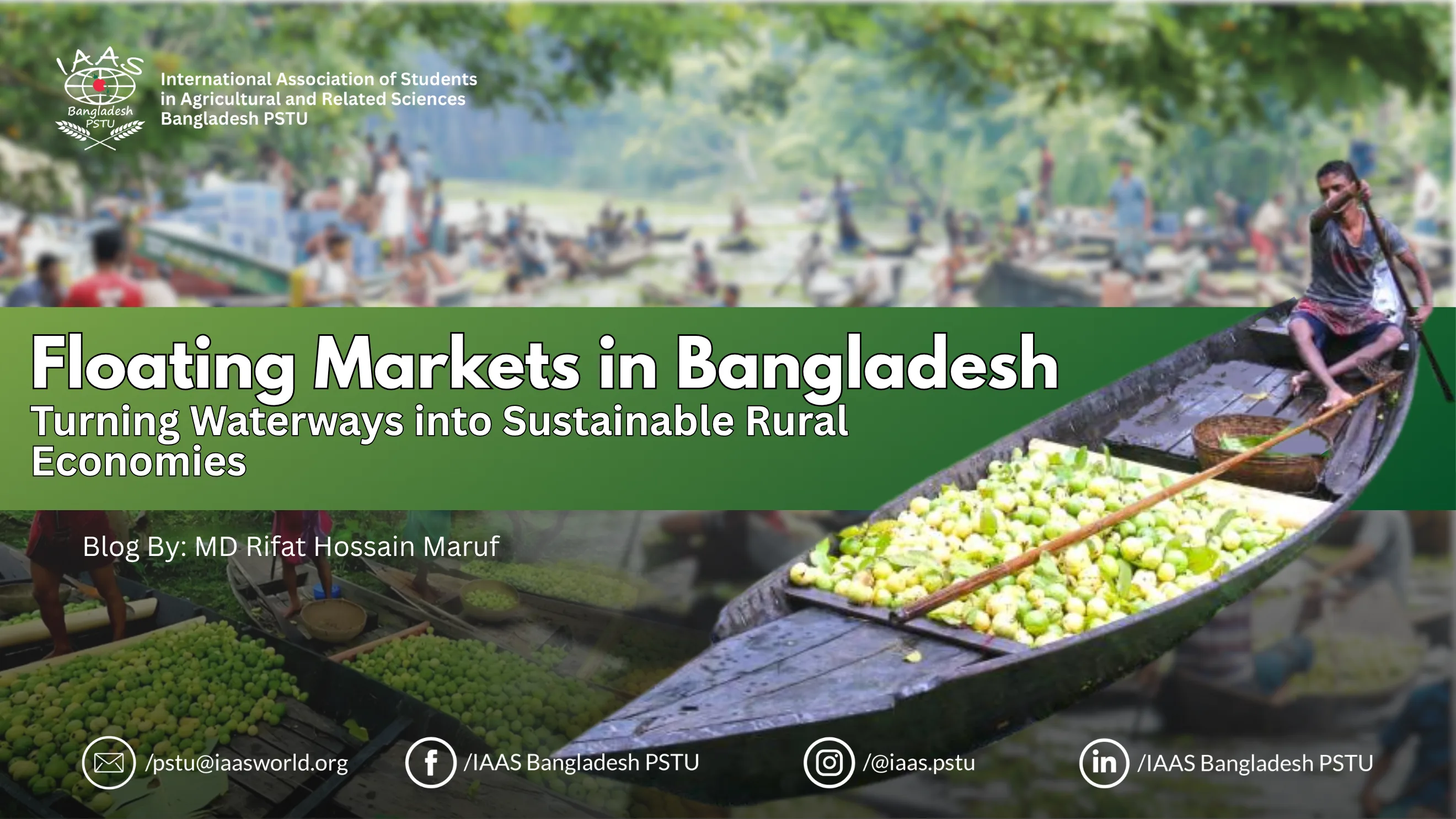
The first thing that captures everyone's attention is the unusual way the entire marketplace operates. There are no conventional rows of shops stretching along a road. Instead, boats loaded with guavas become floating shops, and the canals become the pathways connecting buyers and sellers. Watching people conduct their daily business on the water makes it easy to understand why this place is so different from an ordinary rural market.
With a history of around 200 years, the Swarupkathi floating guava market is deeply connected with the agricultural and economic life of the region. Generation after generation, local farmers and traders have depended on this water-based marketplace to sell their produce and earn their livelihoods. Over time, the market has gained recognition not only within Bangladesh but also beyond its borders.
During the peak season, the scene becomes even more spectacular. Hundreds of boats are loaded with fresh green and light-yellow guavas, slowly floating through the peaceful canals. Looking at the colourful boats from a distance, the entire marketplace appears like a “canvas of green and yellow.”
For visitors coming from Dhaka and other districts, reaching this unique marketplace is itself part of the adventure. They can travel to Swarupkathi or Banaripara and then hire a boat or trawler to explore the floating markets around Atghar, Kuriana and Bhimruli. As the boat moves through the waterways, visitors can observe the surrounding guava orchards, farmers, traders and the traditional water-based lifestyle of the local communities.
The market is usually at its busiest and most lively during the morning, particularly from early morning until around noon. At that time, the canals become filled with the movement of boats and the activity of buyers and sellers. Some tourists also enjoy bathing in the water and spending their leisure time in the peaceful surroundings. And perhaps that is one of the reasons why people keep coming here. Beyond the market itself, the surrounding nature provides a unique feeling of joy, relaxation and mental peace.But as we look beyond the beautiful scenery, we begin to realise that this is much more than a tourist attraction.
Besides guavas, sellers also transport and sell various food items and other necessary goods by boat. In this way, the waterways themselves become a means of transportation, trade and livelihood. During the guava season, transactions worth around 200 million taka take place in this market.
Behind all these transactions are thousands of people whose livelihoods depend on the market. Nearly 2,000 orchard owners from Swarupkathi and Jhalokathi rely directly on this marketplace to sell their produce and support their families. Every boat carrying guavas therefore represents not just fruit, but also the hard work, income and livelihood of farmers and traders.
However, despite its remarkable economic importance, the market faces a serious challenge. Because of the lack of cold storage facilities, a large amount of guava goes to waste every year. Since the fruit is highly perishable, this wastage causes significant financial losses for farmers. To address the problem, local farmers and traders have long been demanding the establishment of a cold storage facility and a jelly-processing factory in the area.
Such facilities could help preserve excess guavas, reduce post-harvest losses and create opportunities to process the fruit into value-added products. In turn, this could strengthen the income of local farmers and make the traditional floating market even more economically sustainable.
Yet, when the discussion moves away from economics and back toward nature, it becomes clear that the beauty of this place is just as important as its business.
Hundreds of wooden boats filled with layers of fresh green and ripe, light-yellow guavas float gently across the calm and clear water of the canals. As the colourful boats drift through the waterways, the entire scene looks like a living canvas. During the rainy season, the beauty becomes even more remarkable. Water droplets rest on the leaves after rainfall, the gentle sound of flowing canal water creates a soothing rhythm, and the calls of different local birds echo from the dense orchards. Meanwhile, the shadows of trees dance across the water, creating a peaceful and almost magical atmosphere.
Standing among such surroundings, it becomes difficult to think of the market as simply a place where fruits are bought and sold. It feels more like a living connection between water, agriculture, nature and human life.
The canals carry the boats.
The boats carry the guavas.
The guavas carry the income of thousands of families.
And that is what makes the Swarupkathi floating market so special.
It shows us how naturally Bangladesh's waterways can become part of the rural economy. Here, the same water that creates the beauty of the landscape also carries agricultural products, connects farmers with buyers, provides transportation and supports livelihoods.
The Swarupkathi floating guava market is much more than a traditional marketplace. It is a remarkable example of how waterways, agriculture, employment, tourism and rural economic development can come together in one place. With proper infrastructure such as cold storage facilities and fruit-processing industries, its economic potential could be increased even further while reducing the amount of agricultural produce that goes to waste. Therefore, protecting and developing this historic floating market is not simply about preserving a beautiful tourist destination. It is about protecting a centuries-old way of life and strengthening the rural communities that depend on it.
Perhaps the most beautiful lesson from Swarupkathi is this: in Bangladesh, waterways are not merely part of our landscape—they can also become pathways to sustainable rural economic development.

General Member of IAAS Bangladesh PSTU. Faculty of Agriculture, Patuakhali Science and Technology University
Related articles
Aug 11, 2026
Bhawal’s Cry: From Sacred Forest to Dumping Ground?
I was born where the red earth of Gazipur meets the ancient silence of the Sal forest, and I grew up beneath the vast, s...
Jul 21, 2026
Srihatta: A Journey That Fed the Soul
Some trips are planned. Some trips are needed. This one was both. After a week of lectures, assignments and the particul...

Jun 30, 2026
Where History Meets Wilderness: Bagerhat to Karamjol in 48 Hours
On an exhausting day, while I was napping to relieve my fatigue, I got a text from my friend,” Want to go on an educatio...