
Environmental Impact of Eid-ul-Adha in Bangladesh
One of the biggest religious festivals celebrated around the globe in the Muslim world is Eid-ulAdha. During this time, millions of animals are killed yearly. The festival has spiritual and social importance, but it also poses serious environmental concerns, particularly in highly populated nations such as Bangladesh.
About 9.13 million animals were sacrificed in Bangladesh during Eid-ul-Adha 2025, according to the Department of Livestock Services (DLS). Of these about 4.7 million were cows and buffaloes and 4.4 million goats and sheep. Such a massive number of animal sacrifices within only a few days creates huge pressure on urban sanitation and waste management systems.
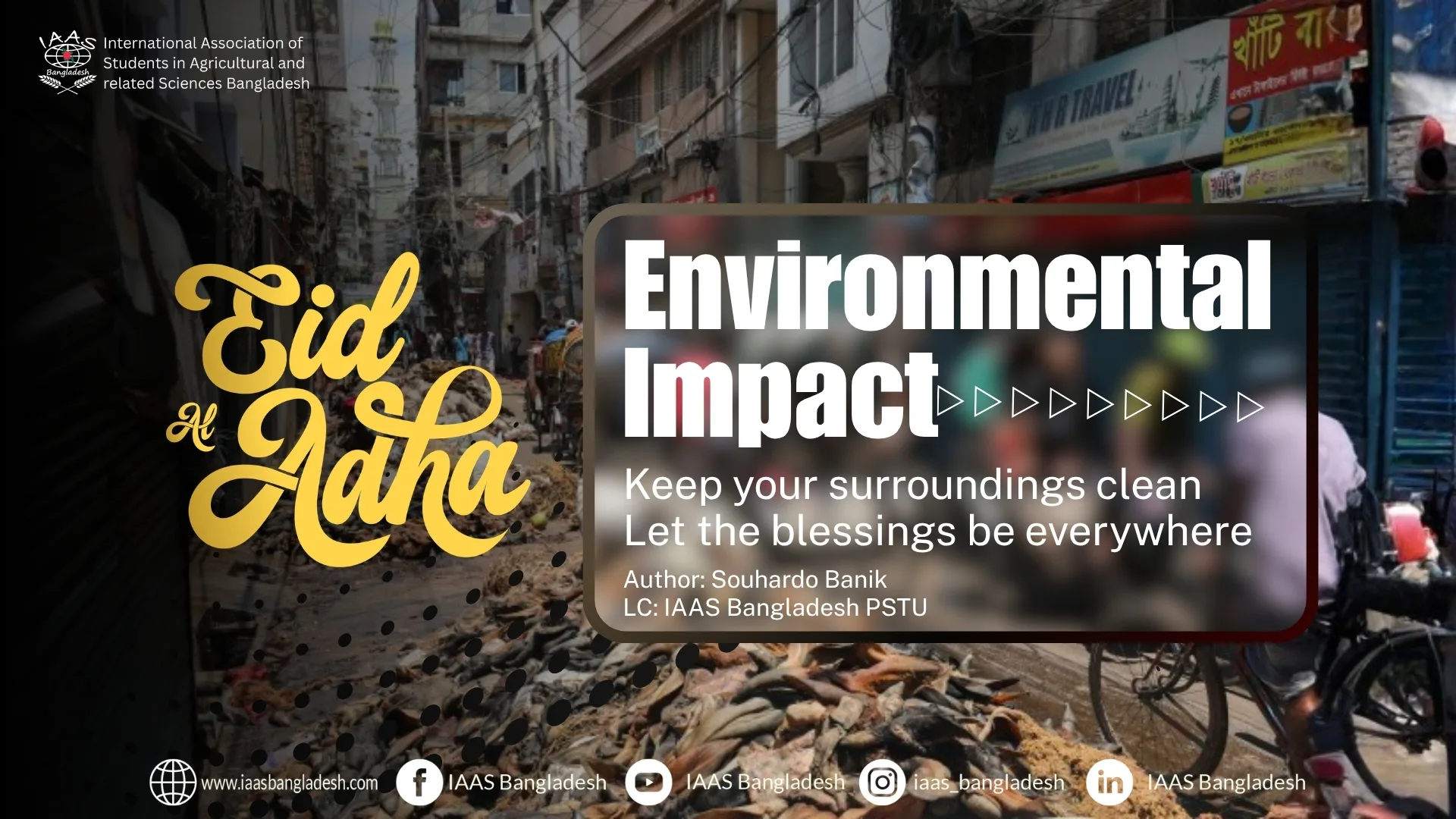
Solid waste generation is one the most severe environmental consequences of Eid-ul-Adha. In a span of three days after Eid 2025, the combined efforts of the two Dhaka City Corporation authorities, Dhaka North and Dhaka South City corporations, resulted in the removal of almost 52,115 tonnes of sacrificial waste. Only 31,226 tonnes of waste was collected in Dhaka South and 20,889 tonnes in Dhaka North.
This waste consists primarily of blood, bones, fat, internal organs, animal hides and wastewater. Many of these wastes are disposed of in open drains, canals and streets in many regions. In rainy seasons, the waste mixes with rainwater and spreads disease-causing germs like diarrhea, skin infections and cholera.
During Eid-ul-Adha, air pollution is also a huge problem. At high temperatures, animal wastes break down rapidly and release gases such as methane and ammonia and odors. Methane is one of the most potent GHGs that cause global warming. Livestock production accounts for almost one-fourth (24.5%) of global anthropogenic greenhouse gas (GHG) emissions, according to the Food and Agriculture Organization (FAO).
By Eid 2025, Dhaka alone had recorded over 632,000 animal sacrifices, inflicting a huge short-term environmental impact on the drainage system and waste management. The experts believe that even after the improvement of waste collection in the city corporations in comparison with past years, the management of waste in many houses of the city is not satisfactory and there is water contamination after the sacrifice and so on.
In contrast, Bangladesh does not have modern slaughterhouses or centralized waste treatment systems, leading to a high level of environmental pollution. In comparison, Saudi Arabia and the UAE have modern slaughterhouses and centralized waste treatment systems which reduce pollution in the environment to a significant extent, which is not the case with Bangladesh. Roadside and domestic sacrifices continue to be significant in Bangladesh, making waste management more challenging.
We are also responsible citizens and have important responsibilities to minimize environmental pollution during Eid-ul-Adha. First, where possible, sacrifices should be made in the area where they are to be made. Second, do not put animal blood or waste in drains or water bodies. Third, citizens should be using biodegradable bags and working with the city corporation cleaning staff. Lastly, there should be awareness regarding the issue of sacrifice in a hygienic and eco-friendly manner in schools, mosques and social media.
Eid-ul-Adha inculcates the values of sacrifice, responsibility and compassion. It is also their duty to protect the environment. If the planning, awareness and scientific management of waste in Bangladesh is properly done, it is possible to celebrate the Eid-ul-Adha in a cleaner and ecofriendly manner.
References:
1. Department of Livestock Services (DLS), Bangladesh, 2025
2. UNB Bangladesh News – “Over 9.1 million animals sacrificed across Bangladesh.”
3. The Business Standard – Waste management reports of DSCC and DNCC
4. FAO (Food and Agriculture Organization) – Global Livestock Emission Statistics

About the author
Souhardo Banik Payel
Documentation officer of the External Relation team of IAAS Bangladesh PSTU.