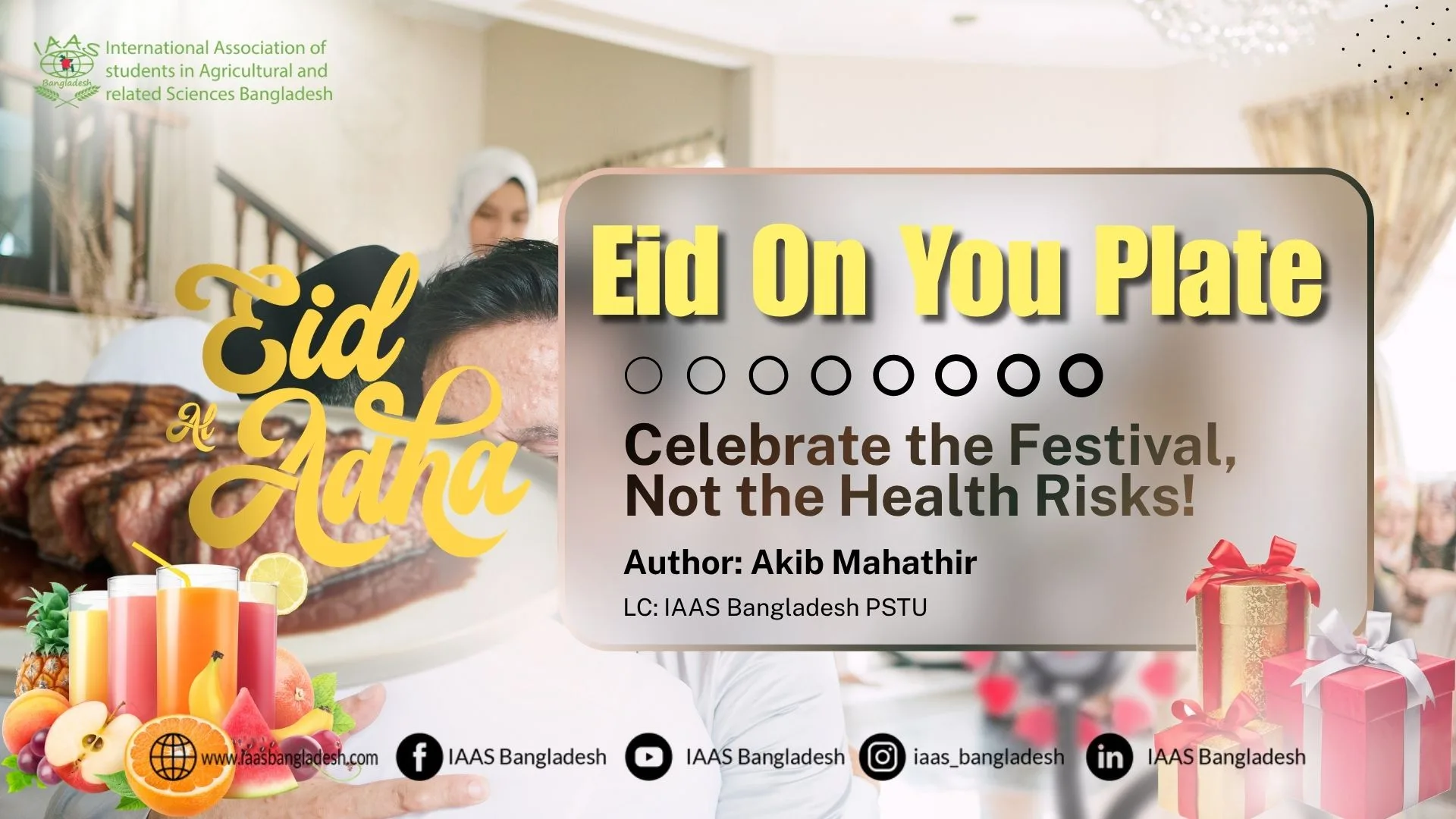
Eid on Your Plate: Celebrate the Festival, Not the Health Risks!
Eid is pure magic. The smell of biryani drifting from the kitchen, the sizzle of seekh kebabs on the grill, the gleaming bowls of semai waiting on the table.
Honestly, half the joy of Eid lives in the food. And why shouldn't it? This is a celebration, not a diet camp.
But here is the thing nobody talks about between the second helping and the third dessert: somewhere between all those lunch invitations and late-night feasts, our bodies quietly start protesting.
Bloating, acidity, that terrible sluggish feeling at four in the afternoon, sound familiar?
Every Eid, millions of us trade our energy for an overloaded plate, and then spend the next two days regretting it.
The good news is, you do not have to choose between enjoying Eid food and feeling good.
You just have to be a little smarter about it.
The Common Mistakes That We Keep Repeating
Let us be honest about the habits that quietly ruin our Eid. Skipping breakfast to "save space" for the big lunch is the oldest trick in the book and also the worst one.
It does not save appetite; it triggers overeating. By the time the biryani arrives, hunger has taken over completely, and portion control goes straight out the window.
Then there is the endless round of invitations like a cousin’s place, a neighbour's dawat, and at every stop, saying no feels rude.
So we eat. And eat again. Add soft drinks on the side, a few rashogollas or gulab jamuns "just this once," and a heavy mutton curry at eleven at night, and the body simply cannot keep up.
Rushed eating makes it worse. When you eat fast, your stomach does not get the chance to signal fullness to your brain. By the time that signal arrives, you have already eaten half the table.
How to Actually Enjoy Eid Food Without the Aftermath
Start your Eid morning with something light a handful of dates, a glass of water, maybe a small bowl of oats or fruit. This single habit changes the entire day. You arrive at every meal in control rather than desperate.
When you sit down to eat, think of your plate like a thali. A good portion of protein, whether that is chicken, mutton, or dal vegetables on the side, and a moderate serving of rice or roti. You can absolutely have biryani and kebabs and korma. Just do not pile them all up at once like it is your last meal on earth.
Sweets deserve their own moment. One good piece of shahi tukda or a small bowl of kheer, eaten slowly and with full attention, is more satisfying than three pieces gobbled in a hurry. Taste the thing properly. That is the whole point.
Water is underrated during festive days. Between the richness of the food, the sugar, and the general excitement, dehydration sneaks up fast. Keep sipping water throughout the day; it aids digestion, reduces bloating, and genuinely helps you feel better.
And after a heavy meal, instead of collapsing on the sofa, take a walk.
Even fifteen minutes around the neighbourhood helps blood sugar settle, and digestion move along. It is simple, and it actually works.
A Word for Those Managing Health Conditions
If you have diabetes, high blood pressure, or heart-related concerns, Eid eating needs extra thought, not restriction, but awareness.
Smaller portions, fewer fried items, less sugar in the mithai. You can still participate in every meal and every celebration. Just let your health be part of the decision, not an afterthought.
The Real Eid Is Not on the Plate
The best memories of Eid are never about how much was eaten. They are about sitting together, laughing over old stories, the children running around in new clothes, and the warmth of being with people you love.
Food is part of that beautiful, delicious part, but it is not the whole picture.
So this Eid, eat everything you love. Just eat it with some sense.
References
Centers for Disease Control and Prevention. (2023). Healthy eating for a healthy weight. U.S. Department of Health and Human Services. https://www.cdc.gov/healthyweight/healthy_eating
Food and Agriculture Organization of the United Nations. (2023). Nutrition guidelines and dietary standards. FAO. https://www.fao.org/nutrition
Harvard T.H. Chan School of Public Health. (2023). The healthy eating plate. Harvard University. https://www.hsph.harvard.edu/nutritionsource/healthy-eating-plate
Lichtenstein, A. H., Appel, L. J., Vadiveloo, M., Hu, F. B., Kris-Etherton, P. M., Rebholz, C. M., Sacks, F. M., Thorndike, A. N., Van Horn, L., & Wylie-Rosett, J. (2021). Dietary guidance to improve cardiovascular health: A scientific statement from the American Heart Association. Circulation, 144(23), e472–e487. https://doi.org/10.1161/CIR.0000000000001031
World Health Organization. (2020). Healthy diet (Fact sheet). WHO. https://www.who.int/news-room/fact-sheets/detail/healthy-diet

Content writer in the Communication Team of IAAS Bangladesh.